

Narrative Interiors: Why Homes Are Becoming Story Led Again
There's been a long stretch in interiors where the goal was restraint. Pale walls, quiet palettes, rooms designed to disappear into the background of everyday life. Safe, calm, uncontroversial.
But something is shifting.
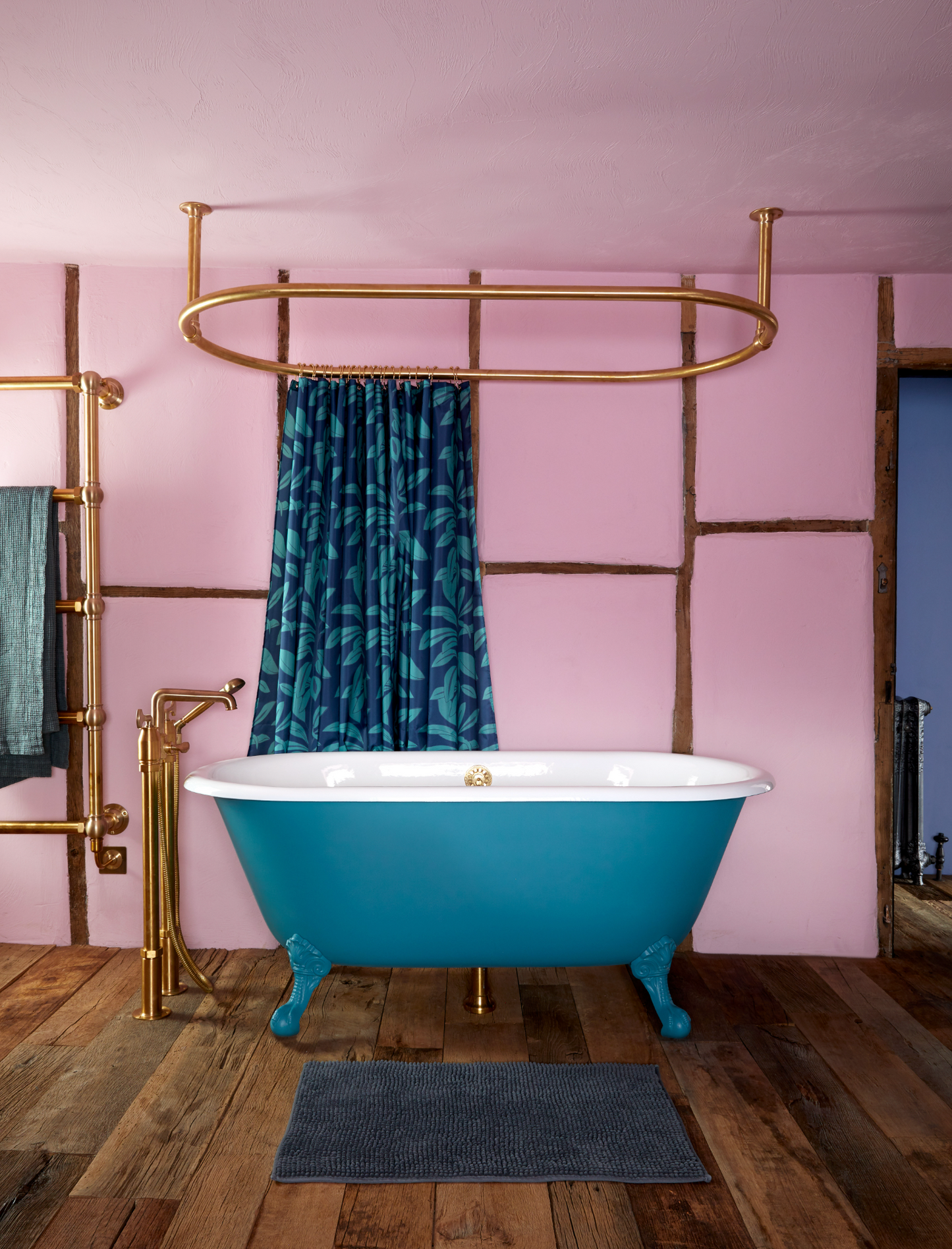
More and more, people are moving away from that idea of neutral living and towards narrative interiors and homes that feel expressive again. Not louder for the sake of it, but more personal, layered with story, memory and meaning.

Where the shift is coming from
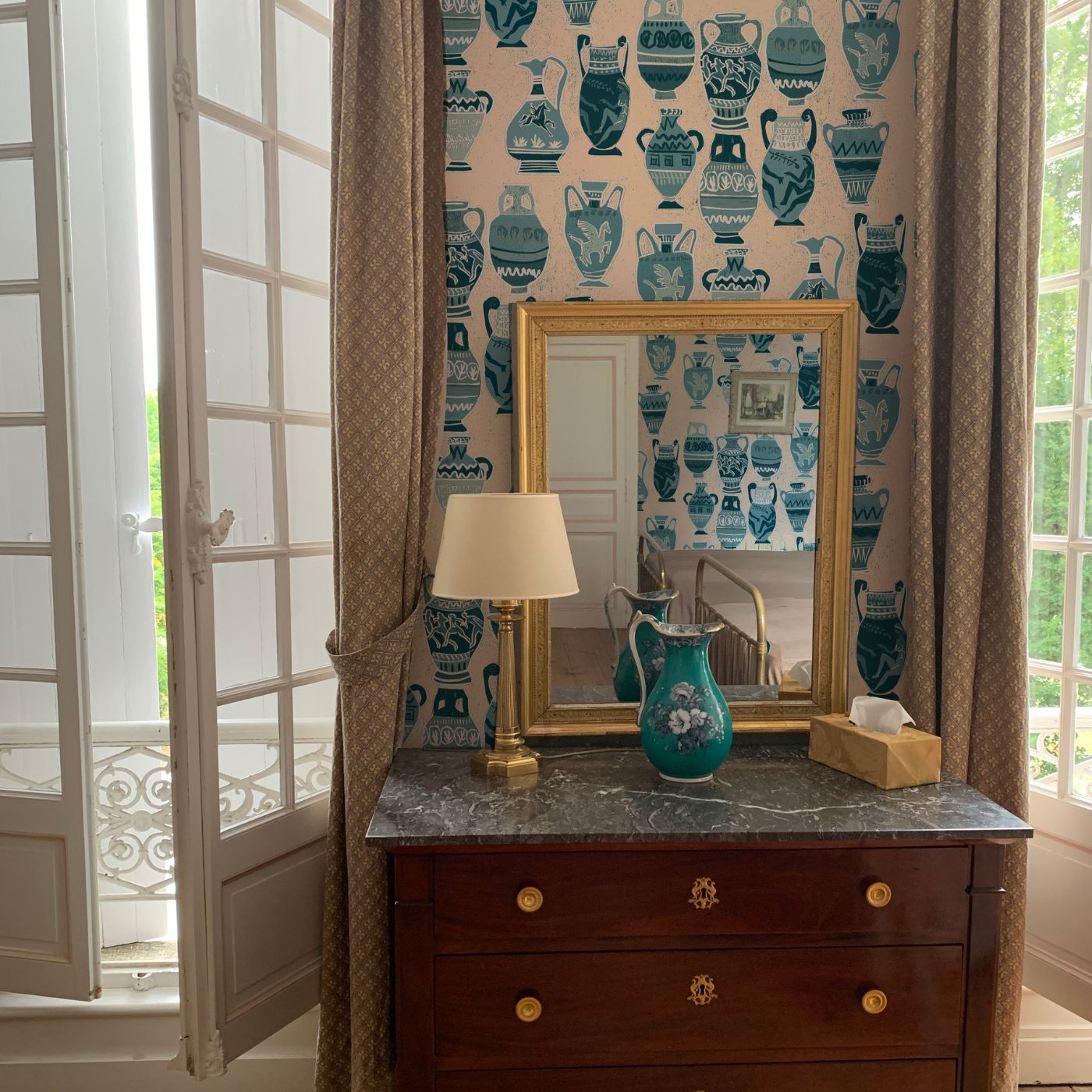
At Annika Reed Studio in Somerset, every design begins with a hand-carved woodblock. It is a slow, physical process, and it shapes everything that follows. The work isn't just about pattern, but about narrative, where an idea comes from, and what it carries into a room.
"I think people are tired of homes that could belong to anyone. Narrative interiors reflect real lives, the places you've been, the things you love, even the small family stories that don't usually make it into design." - Annika Reed
It's a response to years of rooms designed to be photographed rather than lived in. Narrative interiors work against that logic. They're not optimised for a scroll. They're built for the people inside them.
Restrained in scale, rich in meaning
Narrative interiors don't need to be overwhelming or theatrical. In fact, they often work best when they are restrained in scale but rich in meaning.
A hallway wallpaper that references a childhood landscape. A repeated motif that quietly nods to folklore or memory. A children's room built around a story that evolves over time.
When a home is built around narrative rather than trend, it tends to age differently. It doesn't rely on what is current or popular. Instead, it is anchored in something more personal and therefore more stable.
"There's a misconception that storytelling in interiors means chaos or excess. But often it's the opposite. A single idea, carefully carried through a space, can be far more powerful than layering lots of different ones." - Annika Reed
Pattern as language
In narrative interiors, pattern becomes something more than decoration. It becomes a language, a way of holding memory, humour, place and identity within a space.
A wallpaper isn't just background. It's a decision about what the room should feel like. What story it should tell. Who made it, how, and why.
This is what distinguishes truly narrative interiors from rooms that simply use pattern decoratively. The difference is intention. A motif that comes from somewhere - from a specific place, a specific obsession, a specific making process - carries that origin into the room.
Run Away to the Circus was not designed to be a backdrop. The acrobats, the big top, the horses; they have a world behind them. When that world goes on a wall, the room becomes part of it.
Why story-led interiors outlast trends
What's emerging is not a rejection of simplicity, but a redefinition of it. Simplicity is no longer about emptiness. In narrative interiors, it is about clarity of story.
Trend-based interiors have a built-in expiry date. The moment the trend shifts, the room begins to feel dated. Story-led design doesn't work like that.
"When a room is rooted in something personal, you don't tire of it in the same way. It doesn't feel like something you've borrowed from a trend. It feels like something you've built." - Annika Reed
Narrative interiors when properly considered and built from honest choices, are among the most durable of all interior approaches. Not because they freeze a moment in time, but because they hold something that doesn't age: a point of view.
How to build a narrative interior
The most effective narrative interiors tend to start with one strong idea rather than many. A single motif carried through several rooms. A palette drawn from a specific landscape or memory. A surface, a wallpaper, a fabric, with a world built into it.
Practical starting points:
• Choose a wallpaper or fabric whose design has a genuine story behind it - not just a pattern, but a world.
• Let the pattern lead the palette rather than the other way around. A design with depth will tell you what colours to use with it.
• Think about the motifs you actually love: folklore, theatre, landscape, the sea, and find designs that reflect them.
• Don't try to tell every story at once. One room, one idea, carried well, is more powerful than a whole house trying to say everything.
Interior designers working on narrative interiors for clients often find the design brief writes itself once a genuine story is found. The pattern does the work. The room follows.

Frequently asked questions about narrative interiors
What are narrative interiors?
Narrative interiors are rooms designed around a specific story, memory or idea, rather than a trend or a neutral palette. They use pattern, colour and material to reflect the lives and interests of the people who live in them, making spaces that feel personal, layered and lasting. The opposite of a room that could belong to anyone.
How do I start designing a narrative interior?
Start with one strong idea; a place you love, a story that means something to you, a world you want to live inside. Find a wallpaper or fabric whose design carries that story, and let the room build from there. You don't need a lot of elements. You need the right one.
Does narrative interior design work in small rooms?
Often better than in large ones. A single wall of story-led wallpaper in a hallway or study can do more to give a home character than an entire open-plan floor with a neutral palette. The constraint focuses the idea.
What's the difference between narrative interiors and maximalism?
Narrative interiors are about meaning, not volume. A highly restrained room - two colours, one wallpaper, simple furniture - can be deeply narrative if the choices come from somewhere real. Maximalism is about abundance. Narrative interiors are about intention. They can overlap, but they don't have to.
Where can I find wallpaper and fabric designed with narrative in mind?
Annika Reed Studio designs every wallpaper and fabric from a hand-carved woodblock original. Each design has a world behind it, a story visible in the motifs, the mark-making, the way the repeat is built. Samples are available at annikareed.com.